

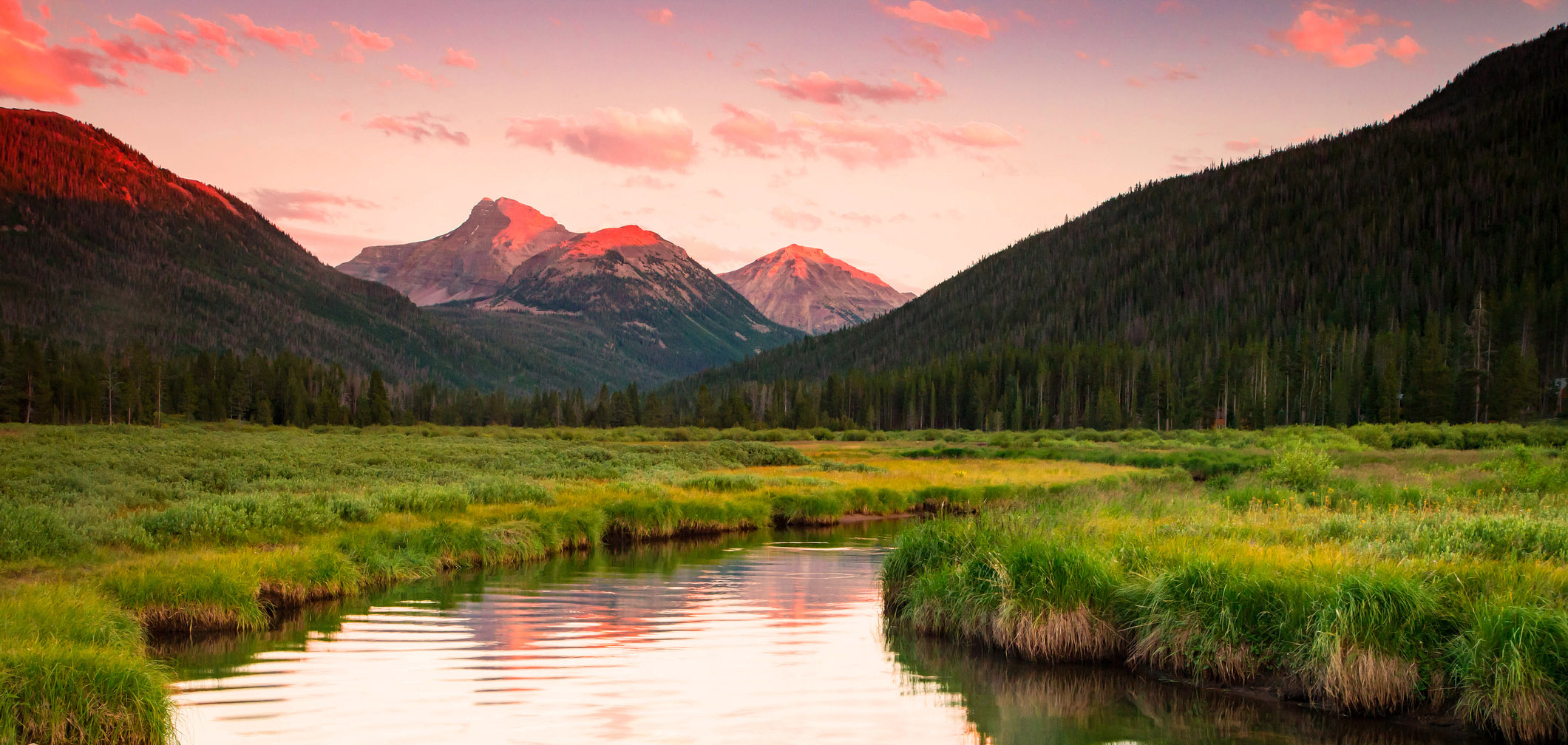
Bowen Collins & Associates has been working with the State of Utah on the Bear River Pipeline Project to implement the Bear River Development Act. As Weber and Box Elder counties have grown over the last decade, the need to identify the route(s) for conveyance and storage facilities has intensified. Limited rights-of-way exist and many of those rights-of-way are being identified and planned for development, other utilities, or transportation corridors. The purpose of this project was to help identify the pipeline route and water storage sites so that land may be preserved for the project and impacts to the community and the environment may be minimized. This study helped the State identify environmental issues, prioritize property acquisition planning activities, identify potential recreational opportunities, and provided costs associated with the alternatives. The project will develop thousands of acre-feet of Utah’s water rights on the Bear River, for people of Cache County, Box Elder County, and the Wasatch Front. The technical components of the study included hydrologic evaluations of the Bear River watershed, an evaluation of project impacts to lake levels, water use and return flow studies, and effects of anticipated climate change.
Archives: Projects
Southwest Aqueduct Reach 1
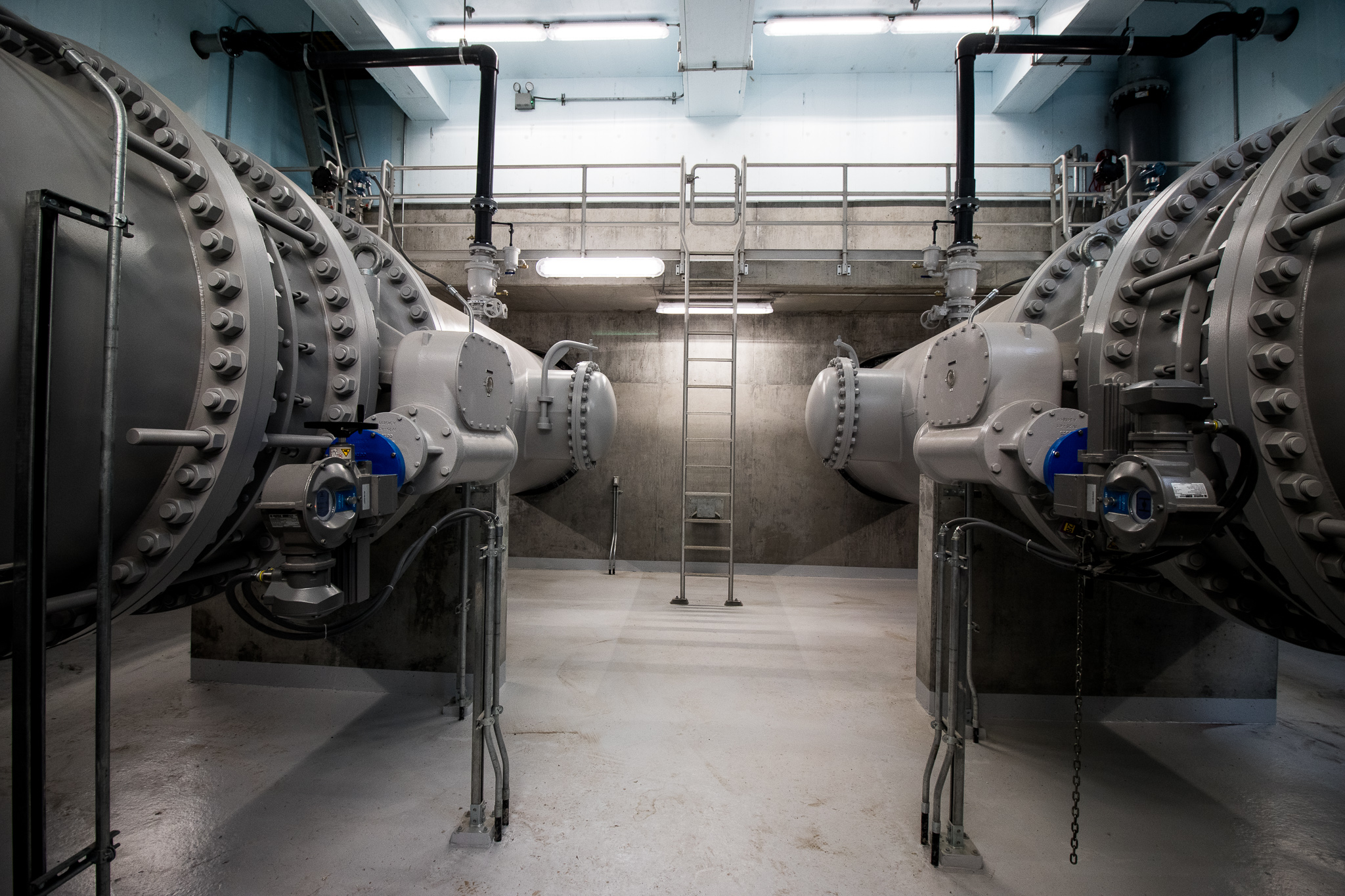
BC&A developed the design and is currently providing construction management for the Southwest Aqueduct Reach 1 Project (SWA-1). The design of the SWA-1 project included the evaluation of a new 66-inch Aqueduct that will parallel the existing 78-inch Jordan Aqueduct Reach 1. The design also included an alignment study, a geotechnical investigation, a hydraulic evaluation of multiple operational scenarios, a pipeline material evaluation, a corrosion protection study resulting in a cathodic protection design, an analysis of relocating a section of the Jordan Aqueduct to accommodate the SWA-1, a utility search and potholing, and permitting review that was documented in a preliminary design report. To provide JVWCD with additional raw water supply capacity for the JVWTP and to provide redundancy to the aging Jordan Aqueduct, the project included over 11,000 LF of 66-inch WSP pipe for the new SWA-1 and segments of new 78-inch and 90-inch pipe to replace existing raw water supply pipelines. The project included four control vault structures, a standpipe, flow control, and modifications to the Jordan Narrows pump station.
The SWA-1 is being constructed alongside the Jordan Aqueduct at a safe offset distance that will allow the existing pipe to remain in operation during SWA-1 mainline construction. At the interconnection valve vault structure, the vault has been designed to enable future 78-inch gate valves to be easily added to the Jordan Aqueduct. With this design, the valves can be added to the Jordan Aqueduct with minimal future operational impacts to reduce the overall future costs of a Jordan Aqueduct valve project.
Silver Creek Trunkline Sewer Rehabilitation
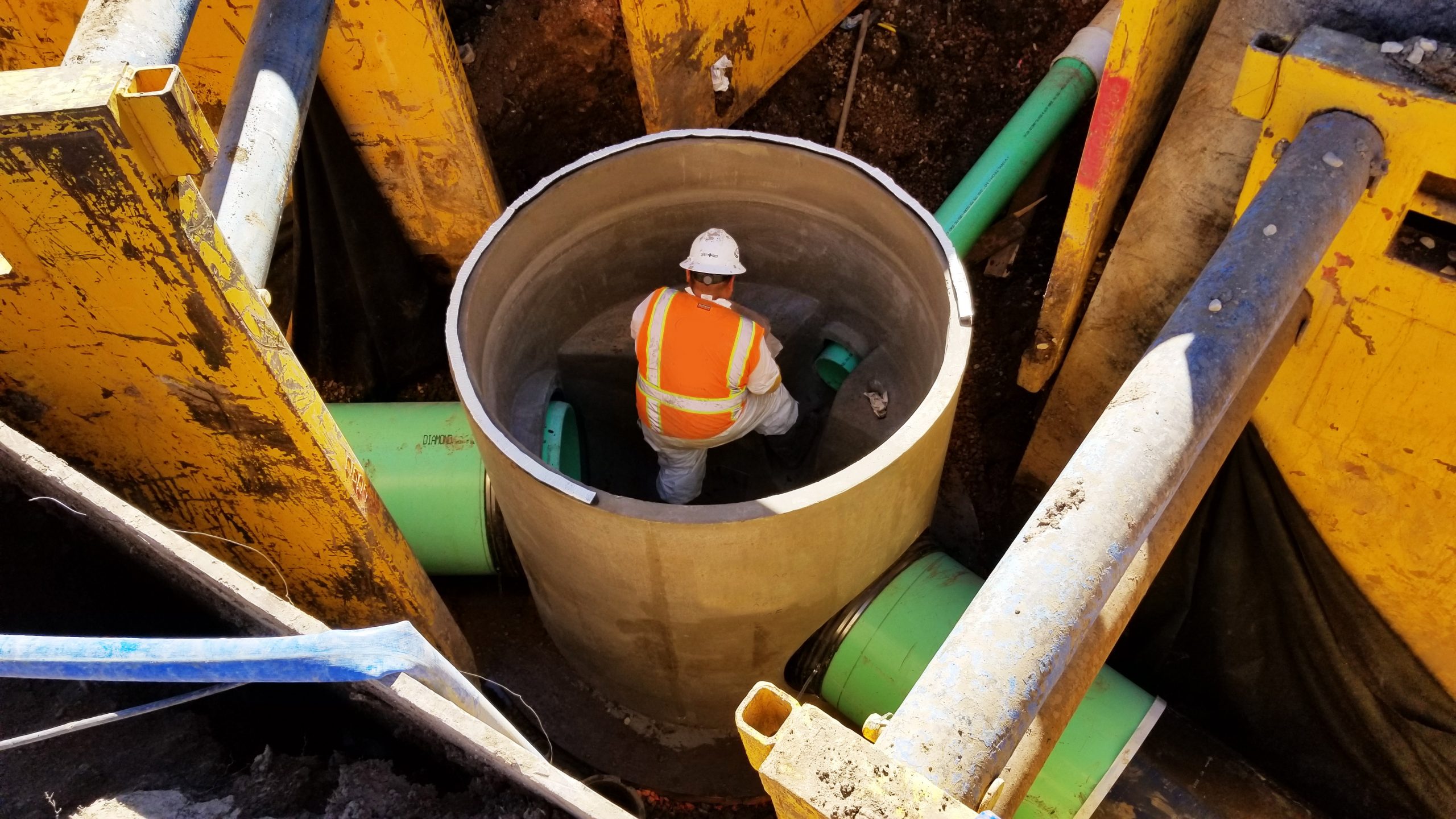
BC&A provided planning, design and construction engineering to rehabilitate the Silver Creek trunk sewer line in Park City, Utah. The project location spanned from the SR 224/SR 248 intersection, along the SR 248 right-of-way, and the Silver Creek corridor to the Silver Creek Water Reclamation Facility. The project included preliminary design and evaluation, final design, and construction services for rehabilitating approximately 7.27 miles of existing 18 – 30-inch RCP sewer pipe. Approximately 500 feet of existing 24-inch ductile iron pipe located below SR 248 was replaced. Of the 500 feet, 262 were within a steel casing which resulted in using open cut and boring methods for installation.
The project featured the use of polymer manholes for both, newly installed manholes, as well as the existing manholes that were severely deteriorated and required replacement.
The project included access improvements and required easements as well as extensive environmental permitting and agency coordination. The project is located in what is known as the EPA OU soil contamination zone and required special soil handling, water and soil monitoring, and discharge permits.
Water Use Data Collection

The State of Utah has been involved in regulating, assisting, and providing funding to local water agencies for decades. Recently, as the demand for water across the state has intensified, the State has come under criticism for not accurately determining water usage by the public water systems. The purpose of this study was to evaluate the State’s method of collecting water use data, estimate the overall accuracy of the results, and make recommendations for further improvements.
Bowen Collins & Associates was tasked with examining municipal and industrial water-use information that was submitted to the State of Utah in 2005, 2010, and 2015. With more than 500 separate water systems reporting data to the State, it was not feasible to prepare a detailed audit of each system as part of this study. To overcome this challenge, BC&A focused on two tasks: (1) meeting with the large water providers that provide the majority of water across the state and evaluating their water usage and source data in detail, and (2) auditing a cross section of several dozen smaller water providers to determine overall data gaps, issues, needs, etc. This approach allowed us to determine the accuracy of overall water usage estimates in the state and develop recommendations for improving the existing program.
By completing the statewide study, BC&A was able to make a number of important observations regarding past efforts:
- Despite its limitations, the data collection process has resulted in accurate estimations of potable water use.
- The data collection process and resulting data accuracy have improved over time.
- Secondary water use and supply estimates are less accurate.
- Time and effort spent trying to perfect data entry for small systems may not be cost effective or necessary.
Moab City Water Reclamation Facility
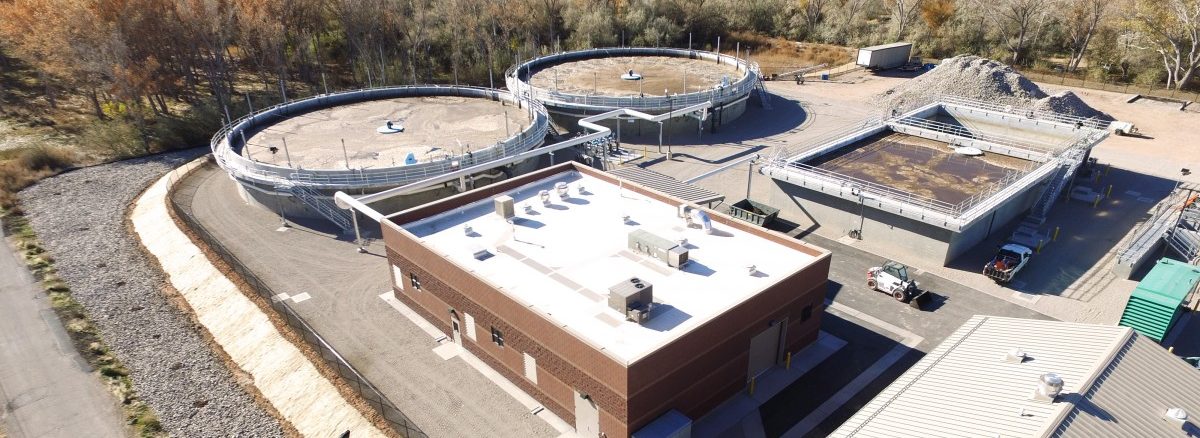
BC&A provided engineering services for facility planning, preliminary engineering, and environmental assessment and permits, detailed design and bidding, and construction management services for the new Moab Water Reclamation Facility (WRF). This new facility replaced the existing wastewater treatment plant that was built in the 1950’s with an improved water reclamation facility. The intent of the new Moab WRF is to provide future wastewater treatment demand due to population growth, meet water quality discharge limits to the Colorado River, and protect the facility from a 100-year flood event. The project was constructed in fall of 2018.
The Moab WRF uses a 1.75 MGD peak monthly flowrate sequencing batch reactor (SBR) activated sludge process to achieve high effluent quality for discharge to the Colorado River. BNR capability is also provided, and supplemented with chemical addition if needed. A new influent pumping station, septage receiving facility, headworks with flow measurement, screening and grit removal, intermediate and final pumping stations, two SBR reactor basins, blower facilities, UV disinfection, flow equalization and sludge holding basins, screw press solids dewatering and utility water pumping station are all included. The SBR basins are provided with removable submerged fine bubble diffusers, floating mixers, submersible return sludge pumps and decanter equipment. Filters can be added in the future to meet reuse quality standards if required. The capacity may be increased to 2.6 MGD peak monthly flowrate in the as flows increase by adding a third SBR basin with its equipment and additional blowers.
The Moab WRF is in an environmental sensitive area that is surrounded by a wildlife preserve, wetlands, and habitat for the yellow-billed cuckoo, a federally listed threatened and endangered species. The project included an environmental assessment, environmental permits and mitigation and protection measures for the yellow-billed cuckoo.
Green River Tusher Diversion EWP
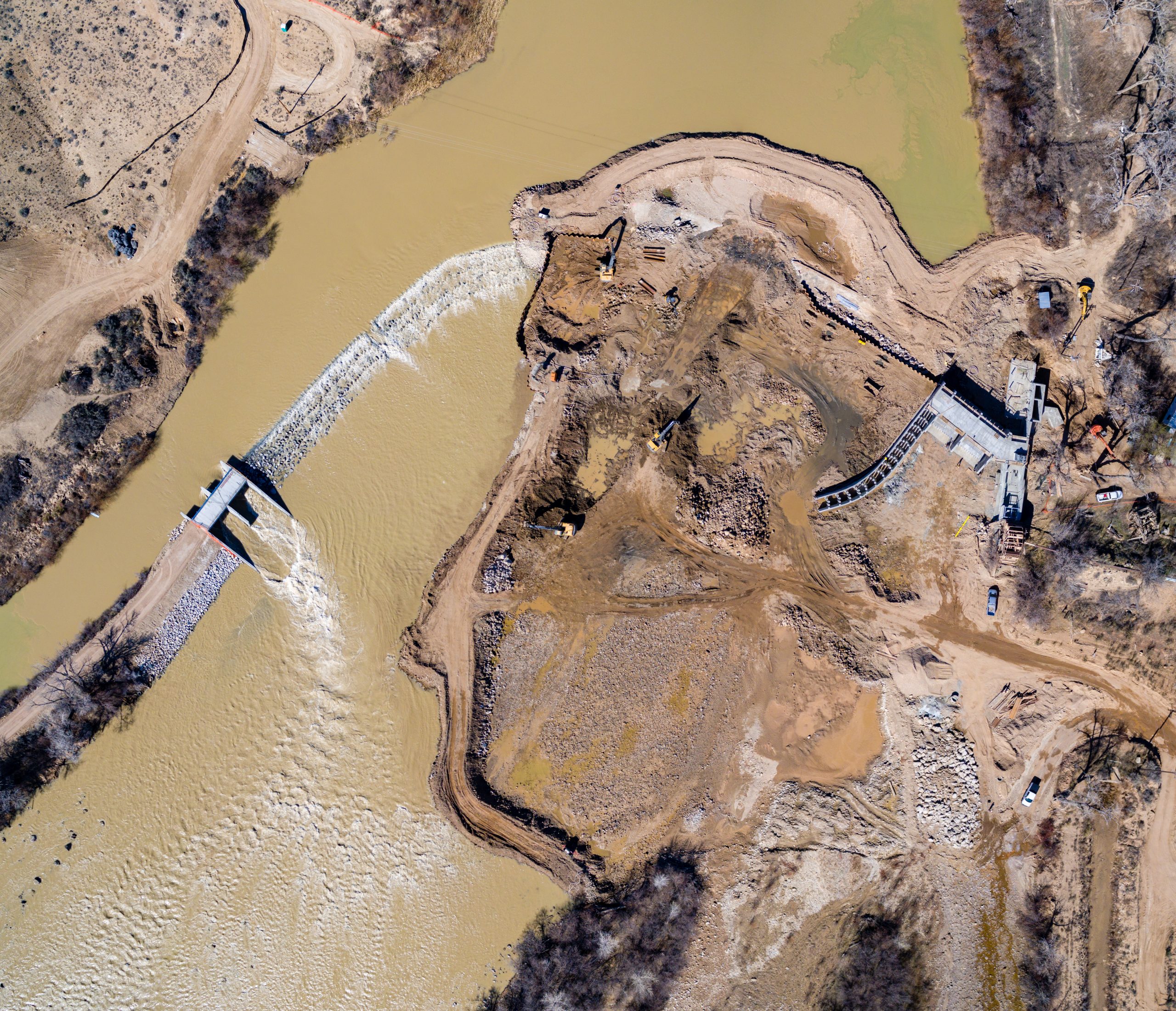
Bowen Collins & Associates (BC&A) completed design and construction management of the Green River / Tusher Diversion Emergency Watershed Protection (EWP) Project for the Utah Department of Agriculture and Food. The United States Department of Agricultures (USDA) Natural Resources Conservation Service (NRCS) administered the project through the Emergency Watershed Protection (EWP) Program.
A new 880-foot long diversion dam was constructed to replace the original Tusher Diversion, a historic diversion dam that was originally constructed in 1913. The diversion dam provides irrigation water to canals on both sides of the river to more than 5,300 acres of farmland and diverts about 600 cubic feet per second (cfs) to an active power plant. High spring runoff flow in the Green River in 2011 caused extensive damage and heightened concerns of a catastrophic failure of the diversion dam that would result in significant losses to the local agricultural industry in Green River, Utah. The project design and construction schedule were accomplished in a very condensed time frame with design beginning in June 2015 and making water irrigation water deliveries by April 2016 and reaching final completion in June 2016.
The new diversion dam was constructed of grouted riprap stair steps that dissipate energy in the water and prevent dangerous downstream recirculating hydraulics that are common with similar diversions. The new diversion dam includes a boat passage for recreational boaters, upstream fish passage, downstream fish passage, restoration of water delivery to a historic waterwheel, and improved sediment sluicing. This project was awarded the 2018 ACEC Utah Grand Award.